

What Happens When Veterans Finally Get to Come Home
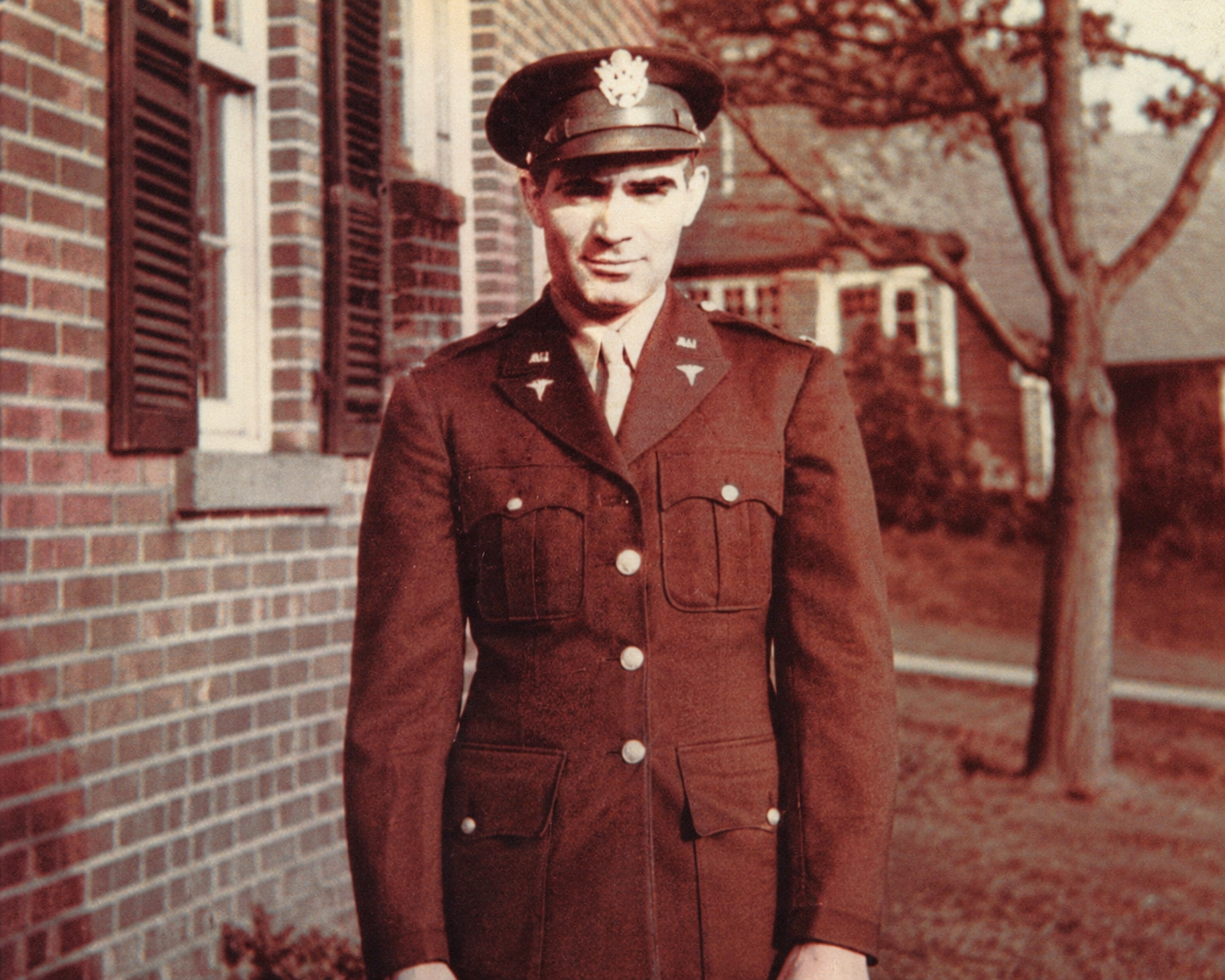
My grandfather, Dr. Benjamin Shafiroff, was a World War II physician. His service makes this work deeply meaningful to me.
What Happens When Veterans Finally Get to Come Home - Not to a place. To themselves.
We just completed a five-session pilot group with a small cohort of veterans and current service members. I have been doing this work for years. What happened in that room was unlike anything I have facilitated before.
I want to write about it. Not to tell their stories, which are not mine to tell, but to explain what this kind of work is, why it matters for this population specifically, and what becomes possible when the right container exists.
Why This Matters
The numbers are not abstract. In 2022, according to the VA's National Veteran Suicide Prevention Annual Report, 6,407 veterans died by suicide. That is an average of 17.6 veteran suicides every single day. Male veterans die by suicide at a rate nearly 60 percent higher than their non-veteran peers. Among female veterans, the rate is 92 percent higher than non-veteran women.
The treatment gap is equally stark. According to SAMHSA data, nearly half of all veterans with a mental illness reported receiving no treatment in the prior year. For veterans with a substance use disorder, that figure climbs to over 80 percent. The VA reports that veterans are most vulnerable in the first three months following separation from military service, though suicide risk remains elevated for years after transition. And for those who do seek care, wait times for mental health appointments at many VA facilities stretch beyond seven weeks for new patients.
Veteran mental health resources are abundant in name and inadequate in practice. The gap isn't only funding. It's approach. Most interventions treat the veteran as someone to be fixed, stabilized, or managed. The body, which is where so much of the experience actually lives, is rarely part of the conversation.
Who Was in the Room
While these four men were seemingly very different in background and current life stage, it was immediately apparent how much they actually had in common.
One had recently transitioned to civilian life after a career in command. He was navigating what it means to no longer be the person everyone looks to, learning who he is when the rank and the role are gone. One was approaching that same transition and still deciding what he actually wants on the other side of service. One had been living with a service-connected disability for twenty years, had done every form of therapy available, and came into this room still searching for something that would reach what the other approaches hadn't. And one was simply trying, after years of hypervigilance that never ceased, to sleep through the night.
All of them knew countless numbers of fellow service members, comrades, no longer here because they never could figure out how to get home.
Different stages. Different wounds. The same fundamental question underneath all of it: who am I now, and is it safe to find out? What will become of the rest of us?
The Problem Nobody Names
Veterans are offered a lot of things when they return from service. Programs. Resources. Hotlines. Diagnoses.
What they are rarely offered is a space where what they carry is treated as something other than a symptom to be managed.
Much of what veterans carry doesn't have language. It lives in the body: in the hypervigilance that doesn't turn off when the mission ends, the sleep that won't come, the walls that go up with the people they love most. Talk therapy asks them to put it into words. But neuroscience tells us something important about why that approach so often falls short.
Dr. Bessel van der Kolk's research, documented in his landmark book The Body Keeps the Score, showed that when veterans are asked to recall traumatic experiences, the part of the brain responsible for translating experience into language goes dark. Broca's area, the brain's speech and language center, essentially shuts down. Literally speechless. Not unwilling. Not avoidant. The words are simply not available.
When we tell veterans to talk about it, we are asking them to do something their neurology makes nearly impossible. And then we wonder why it doesn't work.
What We Did Instead
Over five sessions, this group worked at the level where the patterns actually live: in the nervous system and the subconscious.
We used heart coherence techniques to teach the nervous system something it had never fully learned: that it is safe to come down. That the body can be trusted. That regulation is not a distant goal but a practiced skill available in any moment.
We used somatic tracking to follow what the body was already saying, working with sensation and imagery rather than demanding narrative. We drew on Peter Levine's research in Waking the Tiger, the understanding that humans, like animals, have a biological capacity to discharge traumatic activation and return to baseline. A capacity that most veterans were conditioned out of, in environments where showing the activation was a liability.
We talked about connection and safety: what it means to belong to a unit, what the neurochemistry of that bond actually is, and what it costs when that structure disappears. We talked about survivor's guilt and what it means to actually come home when others didn't.
And we wove a thread of faith through all of it. Not imposed, but offered. Because for many of the men in this room, faith was their anchor, and for some it had become complicated by what they had witnessed. Scripture that names lament, darkness, and the cost of carrying things too heavy to put down alone landed differently in that context than it would in a Sunday morning service.
What I Witnessed
One of the most powerful moments of the entire pilot came when a retired colonel was unexpectedly triggered during an ordinary moment with his wife and daughter. He couldn't communicate with them about what was happening. He went silent in the way veterans go silent, not by choice, but because the words weren't there.
What made this moment different from every other time it had happened is that he came to the next group session and he had language for it. Because of what we had covered in an earlier session about how trauma is stored in the brain, he was able to identify what happened to him as a fractured memory, a fragment of experience stored without context or timeline, surfacing without warning and shutting down his capacity for language.
We worked through it together in the group. In about thirty minutes, he was able to not only understand what the trigger was, but to move through several layers underneath it: the traumatic experience itself, what it had told him about himself for years, and what his inability to communicate it with the people he loved most had cost him in terms of isolation over decades.
He described feeling free in a way he hadn't in years. And then he did something remarkable. He went home and told his wife. And then he shared about it with a group of friends from church.
That is not a small thing. That is what this work is for.
Another of the men attended his military retirement ceremony during the course of our pilot. I had the privilege of being there. To watch him walk out of a twenty-year career, not into uncertainty, not into the grief and dislocation that so many veterans describe at transition, but with a clear sense of his own core values and genuine excitement about what comes next, was extraordinary. He is stepping into his civilian life not from a place of stress, survival, or duty, but from a place of knowing who he is. That shift happened in this room.
And then there was simply this: four men sitting together, naming things that had been uncomfortable since leaving service, having those things recognized and affirmed, and discovering that they can be resolved. The relief of not being alone in it. The relief of having it make sense. The relief of finding out that the body actually knows how to come back.
I witnessed men who had spent years white knuckling through the weight of what service cost them, finally discover the inner safety to slow down and experience peace. Not because their time serving came to an end, but because they came home to their true identity beyond the role.
I watched the group become a container for each other. Not therapists or advisors. Not bonding over the trauma. But bonding over the understanding of who they were back then.
And I tracked the shift in the conversation, gradually and organically, from what they were carrying to who they are moving forward. And who they want to take with them as they go. These men are powerful role models for those who are waiting to still come home.
If You Want to Go Deeper
Dr. Bessel van der Kolk's The Body Keeps the Score: Brain, Mind, and Body in the Healing of Trauma is the most accessible and comprehensive resource I know for understanding why trauma lives in the body and what it takes to reach it. It is required reading not just for clinicians but for anyone who loves a veteran and wants to understand what they are up against.
This work is personal for me. My grandfather, Dr. Benjamin Shafiroff, served as a physician in World War II. I never got to ask him what he carried. This pilot is partly my answer to that question.
I am building a model for veteran and service member group intensives that can be replicated, expanded, and eventually funded to reach those who would not otherwise have access. If this resonates, whether you are a veteran, love one, or work in this space, I would love to hear from you.
If this sounded familiar
Want to see what's running under the surface?
The Neural Audit is a private look at your stress response and your decisions. Twelve questions, about four minutes, and your results appear the moment you finish.
Take the Neural Audit