

What Physicians Carry That Nobody Asks About - And What Becomes Possible When Someone Finally Does.
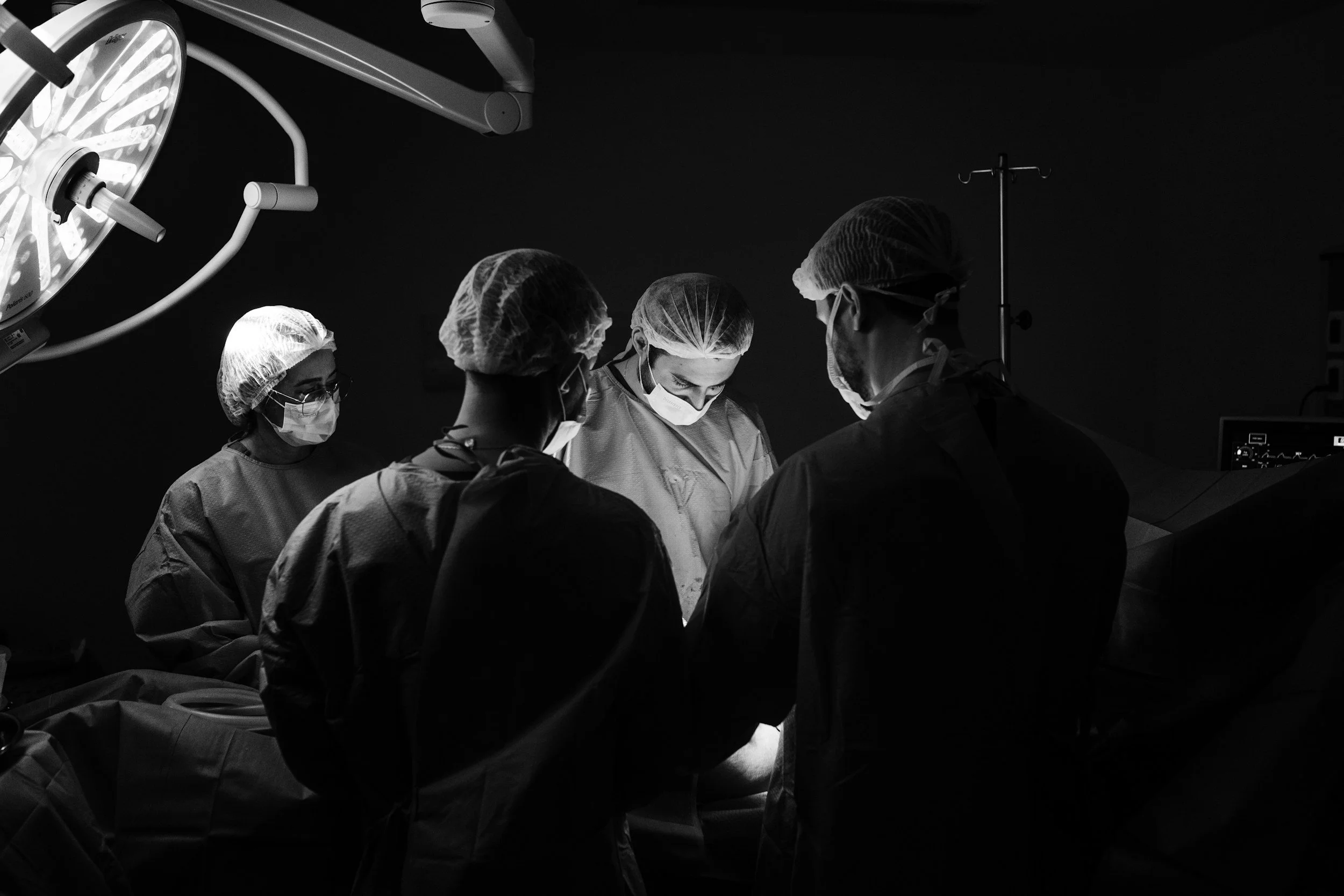
We just completed a five-session pilot group with a small cohort of physicians.* A neurosurgeon. A family physician. A former OB/GYN stepping into a new chapter of his career. Three people who have collectively spent decades in service to some of the most vulnerable moments in human life.
The conversations we had were unlike anything in their professional world. That, in itself, is a problem worth naming.
The Gap No One Talks About
Physicians are trained to hold enormous things. Diagnosis. Prognosis. Loss. The limits of what medicine can do. They are trained to be present, competent, and regulated - regardless of what they are carrying personally.
What they are not trained to do is be on the receiving end of care. And what the medical system rarely provides is a space where the physician gets to be a person rather than a practitioner.
The data behind this is significant. Physicians die by suicide at 1.4 times the rate of the general population - higher still in certain specialties. More than half report symptoms of burnout. Fewer than one in five experiencing distress seek professional support. The barriers are well documented: stigma, licensing concerns, and an identity formation that equates needing help with professional failure.
But behind the statistics is something more specific. Research published in Academic Medicine and the British Medical Journal identifies professional identity and sense of meaning as the core pillars that protect against burnout. When those erode - when a physician can no longer connect what they do daily to why they entered medicine - the consequences are physiological, not just psychological.
The loss of meaning is not a mood disorder. It is an existential crisis. And it has measurable effects on the body.
What We Did Together
Over five sessions, this group did something most of them had never done in a professional context: they told the truth about what the role costs.
We started with the science of heart coherence - using HeartMath research, validated by over 400 independent studies, to establish that the nervous system can be regulated intentionally, that the heart communicates with the brain in ways that shape perception and decision-making, and that high coherence is a key indicator of overall wellness. For physicians, framing this as data rather than self-care removed the first barrier.
We explored what medical training does to identity. Developmental psychologist James Marcia described identity foreclosure - committing to an identity before adequate self-exploration - and medical training is one of its most studied examples. The physician identity gets established early, the system rewards the lock-in, and the person who entered medicine can become eclipsed by the role. We named that in language they recognized, from research they could hold.
We brought in Gabor Maté's work on what sustained suppression of emotional needs costs the body - physically, not just emotionally. And Viktor Frankl's finding that meaning is not a luxury but a clinical variable, with measurable physiological consequences when it disappears.
And in Session 3, we went somewhere unexpected. We talked about faith and suffering - specifically, what it means to carry a faith tradition while witnessing daily what medicine cannot fix. For physicians who believe, this is a particular and rarely spoken tension. Faith is supposed to be the anchor. But sustained exposure to suffering can make the anchor feel like it's dragging.
What we found was that naming it - simply saying this is a real tension and it has a name - changed something. Scripture that sits in lament, in darkness, in the honest cry of someone who has not found resolution, landed differently than answers would have. The permission to not have it resolved was itself a form of relief.
What I Observed
I watched three people who are accustomed to being the most competent person in the room become genuinely curious about their own interior lives.
I watched someone work through something live that he had been carrying for years - and the group witness it without trying to fix it. In that witnessing something shifted that analysis alone could not have reached.
I watched the conversation move, gradually and organically, from what each person was carrying to who in their professional world was still running on empty. Because that is what happens when something real is found. The instinct becomes: who else needs this?
Why This Matters
Physician wellness is a growing field, but most of its interventions are structural - reducing administrative burden, adjusting schedules, adding support staff. These matter. They are not sufficient.
What this pilot demonstrated is that something different is possible - a space where physicians are met as whole people, where the neuroscience and the clinical data are taken seriously, where the identity beneath the role is treated as worth finding and worth protecting.
The physicians in this group did not need to be fixed. They needed a container that was serious enough to hold what they actually carry.
That container can be built. And it can be replicated.
I am building a model for physician group intensives that can be refined, expanded, and brought to medical institutions, hospital systems, and professional networks. If this resonates - whether you are a physician, know one, or work in healthcare leadership - I would love to connect.
*Testimonials from pilot participants coming soon.
If this sounded familiar
Want to see what's running under the surface?
The Neural Audit is a private look at your stress response and your decisions. Twelve questions, about four minutes, and your results appear the moment you finish.
Take the Neural Audit